Are You Sitting Comfortably? Why Sewing Posture Matters
Good sewing posture is essential if you want to sew comfortably and avoid back, neck or shoulder pain. I see many students who come to me because they’re having difficulties using a sewing machine, and quite often the issues are very easily resolved. Sometimes the problems start the moment they sit at the machine, so here are a few quick tips to make sure your sewing session is successful — and isn’t damaging your health. These are my five top tips for happy, healthy sewing.
1. Treat Your Sewing Machine Like Your Computer
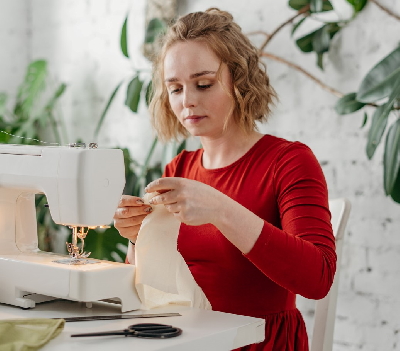
Sit at your sewing machine as if it’s your computer or work desk. Make sure you have a solid surface at normal desk height, with the machine close to the edge of the table so you’re not reaching forward. Good sewing posture starts with the right table height and a stable setup.
2. Choose an Adjustable Chair That Supports You
Your chair height is crucial. Your lower arms should extend straight out or slightly downwards from your elbows. Sit comfortably on the full seat — no perching or twisting! This is not good for your back, shoulders or neck, and you’ll lose control over the machine.
Sit close to the table so you’re not leaning in. Have your knee bent at 90°, and place the foot pedal on the floor directly under the ball of your foot. You should have your heel resting on the floor. This means the weight of your leg is supported and avoids strain. You can then operate the pedal with the ball of your foot to maximise your control over the speed of the machine. Over the 12 years I’ve been teaching sewing classes, I’ve met many people who tell me they struggle to control their machine’s speed. But the most common error they make is not having the pedal tucked directly under their foot. This gives you better machine control and keeps your posture aligned.
3. Make Sure You Have Good Light
Good lighting makes a huge difference. The bulbs in many sewing machines aren’t bright enough. So if you’re not sewing in good daylight, use a separate desk lamp directed at your work area (but not into your eyes). Separate LED strips are now available that you can stick on around the throat area of your machine that provide good strong light. Or consider replacement LED bulbs for your sewing machine. So if yours get very hot, then just swap it out for an LED one. I’ve done that with all my machines, even the vintage ones. It makes for a much more enjoyable sewing experience. No more burning your hand and, since LED’s are more efficient, it’s better for the planet too.
And if you normally use reading glasses, you’ll probably need them for sewing too.
4. Relax Your Shoulders and Breathe
It seems strange to have to say this, but: relax! Your shoulders should be soft, not hunched up around your ears. Sewing should be enjoyable, not an ordeal. If you’re tensing up, your sewing will suffer – and a long session in the wrong position will leave you with back, neck or shoulder pain.
5. Take Regular Breaks
Get up from the chair, walk around, and roll your shoulders. It’s far too easy to get engrossed and stay in the same position for hours. Your machine needs breaks too, so when you go to make a cup of tea, switch it off and give it a rest.
Safe Sewing Starts With Good Habits
If you care for your body and your machine, and take the simple safety precautions described here to improve your sewin posture, you’ll sew more comfortably, avoid injury, and enjoy your creative time much more.
If you’d like help setting up your sewing space for better posture and comfort, my Beginners Sewing Classes cover ergonomic setup, safe sewing habits and practical tips for pain‑free sewing.
If you’re still getting to know your machine, my sewing machine blogs are full of clear, friendly advice to help you sew with confidence.